
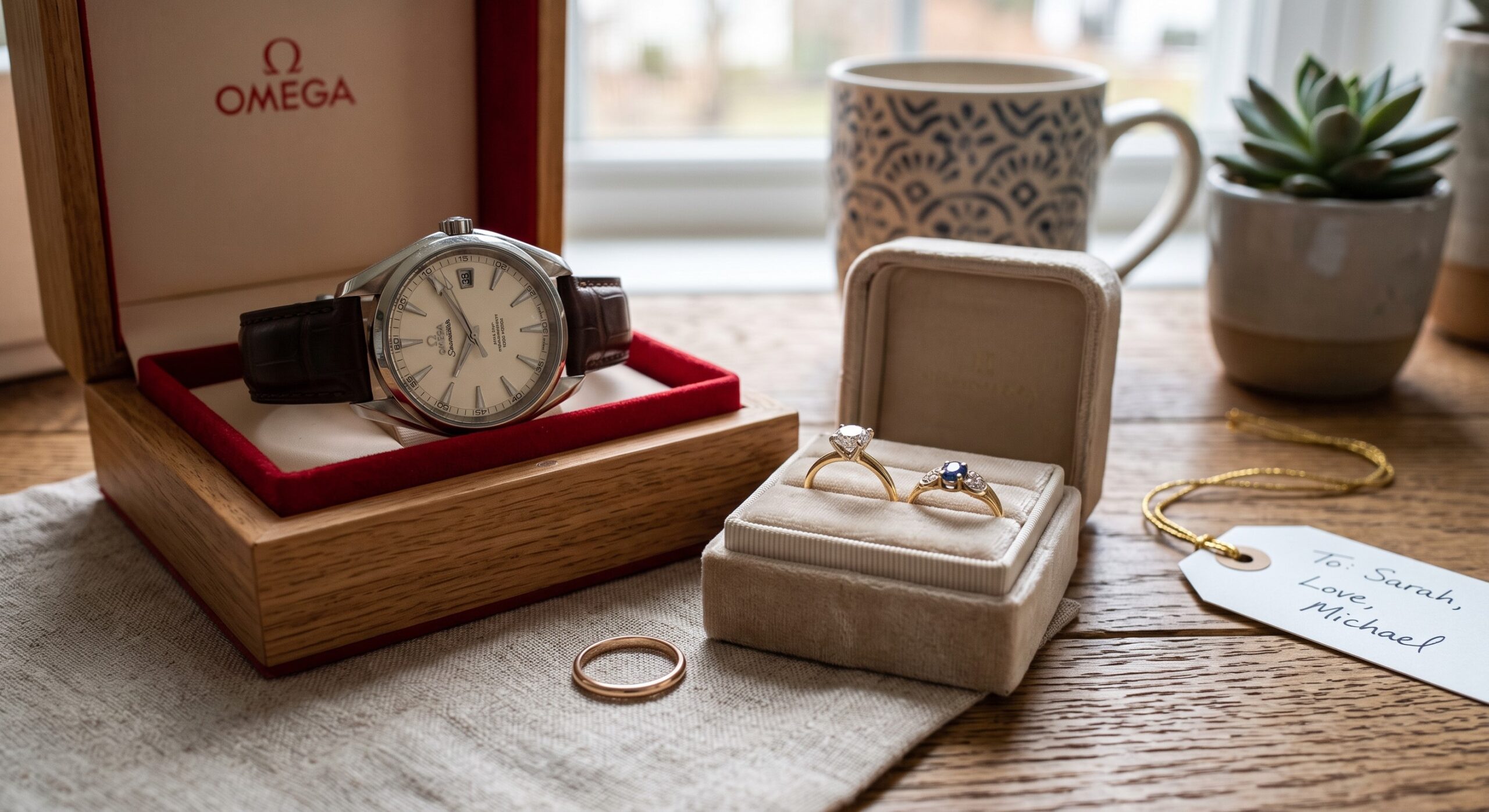
Watches and rings can make thoughtful gifts because they stay close to the body and become part of ordinary routines. That intimacy also makes them difficult to choose. The right gift must suit the recipient’s taste, fit, work, maintenance habits, and comfort with visible wear.
A luxury name cannot answer those questions for you. A better approach begins with observation: what the person already wears, how formal their week is, and whether they enjoy caring for small objects. This guide turns those clues into a practical decision.
Choose Between Watches and Rings by Routine
Start with the object the recipient already understands. Someone who checks the time on a wristwatch every day may welcome another watch with a different purpose. Someone who never wears a watch may experience one as an obligation. The same principle applies to rings.
| Recipient clue | Watch may suit | Ring may suit |
|---|---|---|
| Already wears the item daily | Yes, if the new piece fills a different role | Yes, if size and profile are known |
| Works with gloves or tools | Consider case height and strap comfort | Consider a smooth, low-profile band |
| Enjoys mechanical details | Movement and dial design may add interest | Construction, engraving, and finish may matter |
| Prefers little maintenance | Simple, reliable operation is important | Plain construction and clear care guidance help |
Neither choice is automatically more meaningful. Thoughtfulness comes from matching the object to the person rather than choosing the object with the louder presentation.
How to Choose a Watch as a Gift
Begin With Proportion
Watch diameter receives most of the attention, but overall fit also depends on case shape, thickness, strap width, and the distance between the lugs. Ask for measurements instead of judging from product photography alone. If possible, compare them with a watch the recipient already wears comfortably.
Match the Movement to the Owner
Quartz, solar, and mechanical watches create different ownership experiences. A quartz watch is often chosen for straightforward timekeeping. Solar designs use light to support their power system. Mechanical watches can appeal to people who enjoy winding, setting, and observing a traditional mechanism.
Do not frame one type as universally superior. The better gift is the system the recipient will understand and enjoy maintaining. If the seller makes claims about battery life, water resistance, or service intervals, read the manufacturer’s documentation for that exact model.
Check the Strap and Return Policy
A leather strap, bracelet, fabric strap, and rubber strap can make the same watch feel entirely different. Consider climate, skin sensitivity, work clothing, and whether the recipient prefers a watch to move freely or sit firmly. A clear return or strap-exchange policy is valuable when the fit cannot be tested in advance.
How to Choose a Ring as a Gift
Do Not Guess the Size From Appearance
Ring size varies by finger, band width, temperature, and time of day. Borrowing a well-fitting ring from the correct finger can provide a useful reference, but professional sizing is safer for an expensive or customized piece. Wider bands may require a different fit than narrow bands.
Choose a Profile for Real Life
Low-profile bands and signets move easily under sleeves and are less likely to catch on fabric. Taller settings create more visual presence but may demand more attention. Ask for width, thickness, setting height, and approximate weight.
If the gift carries a symbol, keep it connected to the recipient. A quiet engraving or small Memento Mori motif can feel personal without becoming theatrical. Our symbolic jewelry guide offers a simple framework for choosing meaning with restraint.
Read the Material Description Carefully
Words such as “gold tone” describe color, not solid gold content. Likewise, plated, vermeil, sterling silver, solid gold, steel, and titanium describe different constructions and care needs. The seller should state the material clearly.
The FTC Jewelry Guides provide a useful reference for common jewelry descriptions. They do not replace a seller’s return policy or model-specific care instructions, but they can help you notice vague language.
Add Meaning Without Overdesigning the Gift
Watches and rings already carry visual weight. A gift does not need a long inscription, oversized symbol, and elaborate box at the same time. Choose one meaningful layer.
- An inner-band date that matters to both people.
- A short phrase the recipient already uses.
- A material connected to an existing collection.
- A symbol related to time, memory, craft, or a shared place.
- A removable note explaining why the object was chosen.
If engraving affects returns, confirm the fit first. Give the piece unaltered, let the recipient wear it briefly, and add permanent personalization later. That small delay protects both the meaning and the budget.
A Thoughtful Gift Checklist
- Observe what the recipient already wears.
- Choose the object that fits their routine, not your own taste.
- Confirm measurements, materials, and maintenance requirements.
- Review return, exchange, resizing, and warranty terms.
- Avoid permanent engraving until fit is certain.
- Explain the reason for the gift without pressuring the recipient to keep it.
Permission to exchange a gift is not a failure. It is a practical form of care. Wearable objects have to cooperate with the body, and the recipient knows that body better than the giver.
When the Gift Is Symbolic
A ring or watch can become a private reminder of time. For some people, that may connect naturally with Memento Mori meaning: not a gloomy message, but an invitation to use attention well. For others, the object may simply mark a graduation, move, recovery, or new responsibility.
The strongest meaning is specific and modest. It does not require the object to promise protection, success, or transformation.
The Final Decision
Choose watches and rings by asking what will feel natural six months after the gift is opened. Comfort, clear materials, proportion, and a reasonable care routine matter more than a dramatic first impression.
A thoughtful gift earns its place slowly. It becomes meaningful when the recipient can wear it without friction and understand why it was chosen.