
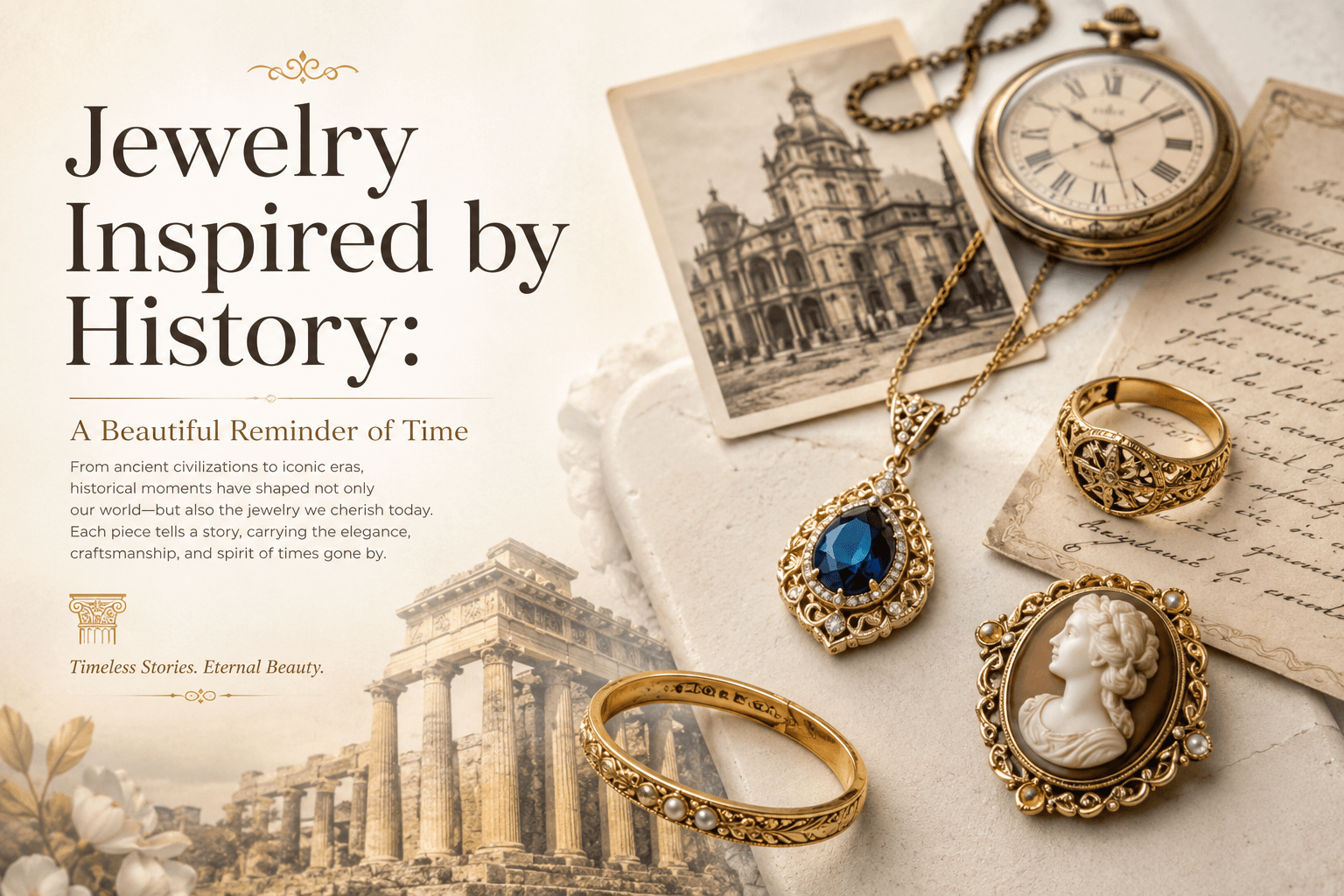
Jewelry inspired by history works best when it studies the past instead of copying its surface. A ring can borrow the proportions of an old signet, a pendant can reference a myth, and a bracelet can echo an ancient pattern. The result should still feel honest about when and how it was made.
This distinction matters. A modern piece can be historically informed without pretending to be an antique, an archaeological replica, or an object with proven ritual use. Clear language protects the buyer and gives the design more credibility.
How Jewelry Inspired by History Begins With Evidence
A broad label such as “Roman,” “Viking,” or “Egyptian” is not enough to guide a design. Start with a specific object, period, motif, or making tradition. Museum catalog records are useful because they usually identify materials, dimensions, dates, and provenance with more care than a product listing.
Look at several objects rather than one dramatic image. Notice recurring proportions, how symbols are arranged, and which details may be the result of wear. Then decide what the modern piece should preserve: the silhouette, the symbol, the material contrast, or the original function.
Reference Is Not Replication
Jewelry inspired by history does not need to reproduce every old detail. In fact, literal copying can make a piece difficult to wear. A large seal ring may need a lower profile. A ceremonial pendant may need less weight. A complex animal motif may become a single engraved line.
The strongest modern designs make one or two deliberate choices and leave the rest quiet. This keeps the reference visible without turning the wearer into a costume character.
| Historical reference | Modern design choice | Question to ask |
|---|---|---|
| Signet or seal ring | Low bezel, engraved face, or intaglio-style image | Is the image carved, cast, stamped, or laser engraved? |
| Animal or mythic figure | One restrained silhouette or relief | Is the culture and story identified accurately? |
| Knot or interlace pattern | Border, band texture, or small repeated element | Is the pattern linked to a documented source? |
| Mortality symbol | Hidden skull, hourglass, flower, or inscription | Does the description avoid supernatural claims? |
Four Historical Motifs to Read With Care
Signets and Intaglio-Style Designs
Signet rings historically served many roles, including identity, status, decoration, and sealing. Modern versions may use carved stones, engraved metal, cast relief, or laser work. These methods create different depth and texture, but one is not automatically more authentic than another.
Ask the maker to describe the process plainly. If a ring is sold as a functioning seal, request an impression before buying. If it is decorative, judge it as a wearable design rather than demanding a function it never claimed to have.
Scarab and Amulet Forms
Scarab forms appear widely in museum collections, but modern jewelry should not flatten them into a vague promise of luck or protection. A responsible description can discuss the historical motif while making clear that the new piece is symbolic jewelry.
For daily wear, inspect how a carved or molded element is secured. A swivel design, fixed bezel, drilled bead, and glued cabochon require different care. Construction matters more than a dramatic product story.
Interlace, Animals, and Myth
Interlaced patterns and animal forms appear across many cultures and periods. Similar shapes do not prove a single origin. If the seller names a culture, look for a source record or a clear design note that explains the connection.
A modern maker can also say “inspired by interlace” without making a narrow historical claim. That modest wording is often more trustworthy.
Mourning and Memento Mori Motifs
Mourning jewelry usually centers on personal remembrance, while Memento Mori jewelry often uses mortality as a broader reflection. The traditions can overlap, especially in antique objects that combine names, dates, inscriptions, and mortality symbols.
Our guide to Memento Mori meaning explains the philosophy, while the comparison of a mourning ring and a Memento Mori ring focuses on the emotional distinction.
Check Materials and Making Methods
Historical language should not distract from basic product disclosure. Ask whether a piece is solid metal, plated, filled, vermeil, cast, fabricated, carved, or assembled from mixed materials. These terms affect price, care, and future repair.
A handmade process can add variation, but it does not guarantee quality. Machine tools can produce precise work, and traditional tools can still be used poorly. Look for clean joins, secure settings, readable marks, and a seller willing to explain the construction.
When a listing uses precious-metal terminology, the FTC Jewelry Guides provide a useful reference for common descriptions.
Make the Design Wearable Now
Jewelry inspired by history should still cooperate with modern life. Check ring width, pendant weight, chain length, edges, setting height, and the way the piece sits under clothing. A design can carry a serious reference without being physically demanding.
- Choose one focal motif rather than stacking several unrelated symbols.
- Use a scale that matches the wearer’s normal clothing and work.
- Prefer clear material disclosure over an elaborate origin story.
- Ask for dimensions and weight, not photographs alone.
- Keep documentation from the maker with the piece.
Avoid the Costume Effect
The costume effect usually comes from excess, not history itself. Oversized motifs, multiple cultural references, artificial aging, and absolute claims can make a piece feel less credible. Restraint gives the reference room to breathe.
Pair one historically informed piece with ordinary clothing. Let the material, proportion, and symbol carry the idea. Our symbolic jewelry guide offers a broader method for choosing motifs that fit the wearer rather than a trend.
Jewelry Inspired by History Buying Checklist
- Identify the specific object, period, or motif behind the design.
- Separate documented history from the maker’s interpretation.
- Confirm materials, dimensions, weight, and construction.
- Check fit, maintenance, return, and repair options.
- Avoid claims of guaranteed luck, protection, or transformation.
- Save the source note and maker documentation.
Source Notes
Use museum databases to compare real objects and catalog language. The Metropolitan Museum of Art collection search for signet rings and the British Museum collection search for rings provide useful starting points.
A Modern Piece With an Honest Past
The goal is not to make new jewelry look old. It is to understand what made an earlier object meaningful, then translate that quality into a piece that belongs in the present.
Jewelry inspired by history feels convincing when the source is specific, the claims are modest, and the design is comfortable enough to become part of real life.