
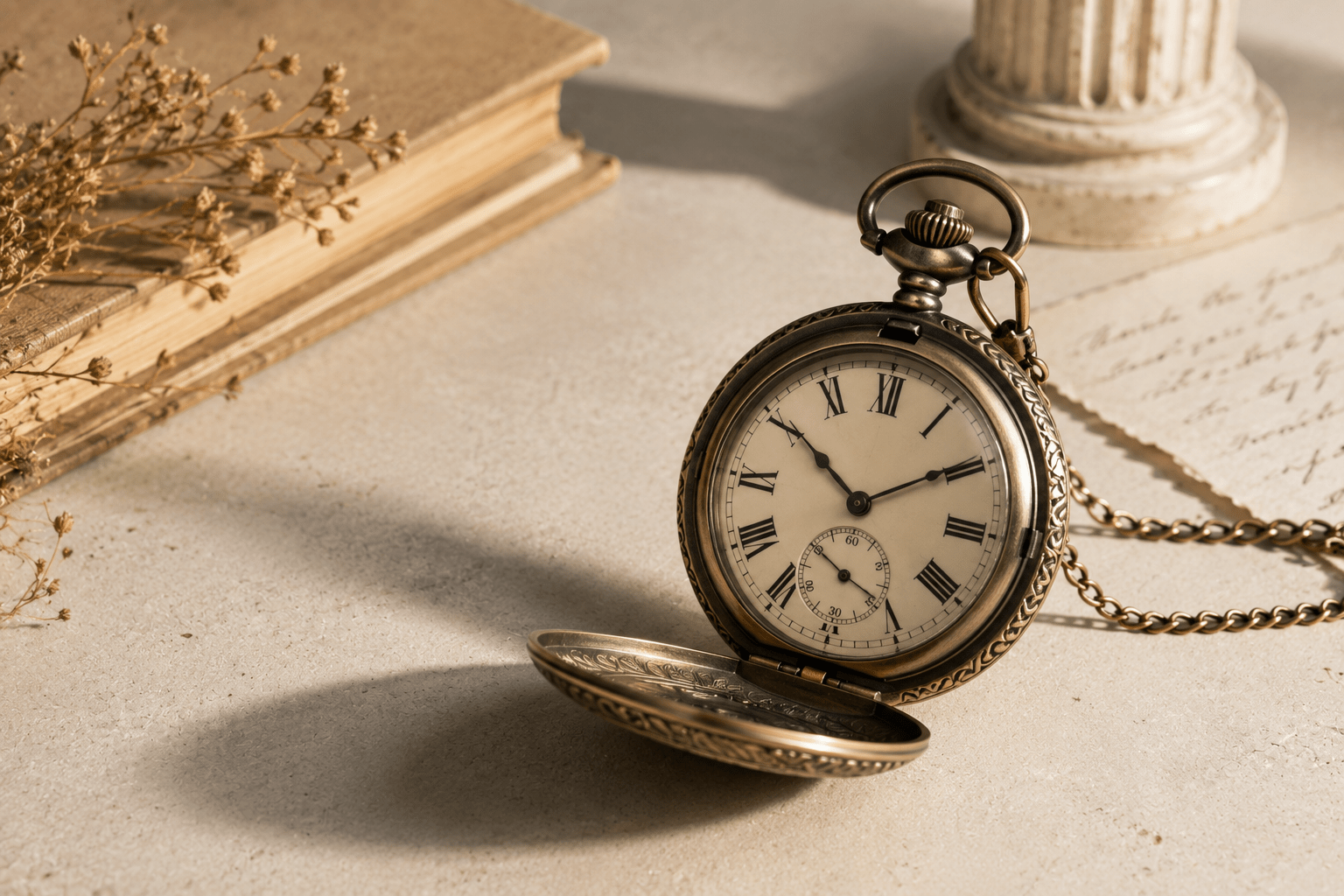
Clock symbolism usually points to time, structure, urgency, and mortality. It is close to hourglass symbolism, but the clock often feels more practical and more social. An hourglass says time is passing. A clock says time is passing and you have a schedule.
That difference matters. A clock can feel disciplined, domestic, ceremonial, or reflective depending on the object and the setting. In vanitas art, it usually takes on a sharper tone. In everyday life, it can simply mean order. The symbol is flexible, but the basic message is the same: time is measurable, and it will not sit still for you.
The Short Answer
At its core, clock symbolism means “your time is being spent.” That can be a warning, a nudge, or a comfort. For some people, the clock is a reminder to act. For others, it is a reminder to stop filling every hour with noise.
That mix of warning and usefulness is what separates the clock from more purely decorative symbols. Even when a clock is old, ornate, or ceremonial, it still belongs to the world of appointments, habits, and repeated days. The object never fully stops being practical, which gives clock symbolism a grounded quality.
| Reading | What It Suggests | Where It Shows Up |
|---|---|---|
| Schedule | Time is structured and limited. | Homes, offices, routines, planners. |
| Urgency | Something matters now, not later. | Reminders, posters, productivity tools. |
| Mortality | Time eventually ends for everyone. | Vanitas art, memorial objects, symbolic jewelry. |
Clock Symbolism In Art
The National Gallery’s description of Harmen Steenwyck’s Still Life: An Allegory of the Vanities of Human Life mentions a ticking watch, a snuffed lamp, and a skull as part of a vanitas scene. The watch is doing the same symbolic work as a clock: it refuses to let the viewer forget that time is active and irreversible.
That is why clock symbolism often feels more severe in art than in daily life. The object moves from being a tool to being an argument. It says that attention, status, and pleasure all happen inside time, not outside it.
For the broader symbolic field, see the site’s mortality symbols encyclopedia. For the more poetic and portable version of the same idea, hourglass symbolism is the cleaner companion page.
Clock Symbolism In Jewelry And Objects
When a clock appears on a ring, pendant, or charm, it usually carries the same core reading but in a smaller, more personal form. The design can suggest punctuality, memory, discipline, or mortality depending on the tone of the piece.
A pocket watch has a slightly different feel from a wall clock. It feels portable and intimate. A wall clock feels public and structural. A tiny clock face in jewelry can feel almost like a secret reminder, especially when the design is restrained.
This is why some readers prefer clock symbolism to skull imagery. The reminder is still there, but it arrives through routine rather than confrontation. A watch face, clock hand, or dial can say the same thing in a language that feels more domestic and less severe.
That makes clock symbolism a good fit for readers who want the memento mori idea without using a skull or hourglass. It gives the same reminder a more everyday shape.
What The Symbol Should Not Mean
Clock symbolism should not be turned into a superstition. A clock is not a prophecy, and it is not a warning that a specific moment is cursed. It is also not automatically negative. In many homes, a clock simply means rhythm and care.
The more honest reading is practical: use your hours well. Do not let the symbol become a panic trigger. A good reminder object helps the wearer pay attention; it does not ask them to live in fear of the next tick.
For the same reason, clock symbolism is strongest when it leads to judgment rather than anxiety. The point is to notice how life is being spent, not to stare at every passing minute. A good symbol returns you to proportion; it does not trap you in counting.
How To Read It With Other Symbols
- Clock and skull: mortality and time together, with very little ambiguity.
- Clock and candle: time passing and a life or moment burning down.
- Clock and book: knowledge measured against time.
- Clock and flower: beauty and time in tension.
If you compare it with an hourglass, the difference becomes clearer. The hourglass makes time feel visible and draining. The clock makes time feel scheduled and shared. Both belong to mortality symbolism, but they nudge the reader in slightly different directions.
This is why clock symbolism remains useful inside the site’s mortality cluster. It helps connect the more literal reminder objects to the broader philosophy of attention, restraint, and living with proportion.
Readers interested in the practical side of symbolic objects can move from here to symbolic jewelry guide or back to the more foundational Memento Mori meaning page.
Takeaway
Clock symbolism is effective because it combines measurement with meaning. It reminds us that time is structured, limited, and worth using well. In that sense, the clock is one of the plainest reminders of mortality, and one of the most useful.
Source Notes
- National Gallery, Harmen Steenwyck, Still Life: An Allegory of the Vanities of Human Life: nationalgallery.org.uk
- Project Gutenberg, Meditations by Marcus Aurelius: gutenberg.org